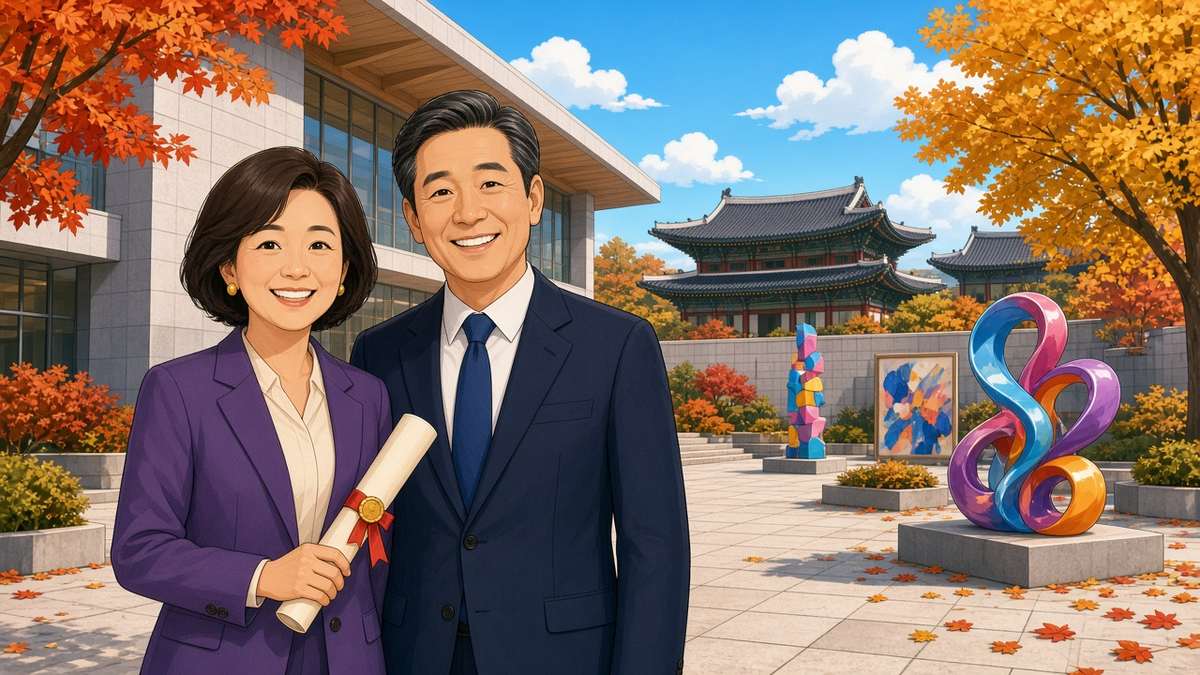
Korea’s flagship museum of modern and contemporary art has a new director. On 13 November 2026, Culture Minister Chae Hwi-young appointed Ki Hey-kyung (also romanised Ki Hye-kyung) to lead the National Museum of Modern and Contemporary Art (MMCA), presenting her with the certificate of appointment at the museum’s Seoul branch in Jongno District. Her three-year term runs through November 2029, as reported by Korea JoongAng Daily and AJP.
An insider coming home
Ki is not new to the institution. She spent around thirteen years as a curator at the MMCA, working at its Deoksugung branch, in the curatorial research division and on the special task force that prepared the opening of the Seoul branch in 2013 – the building near Gyeongbokgung Palace that has since become the museum’s most visible face. She later moved into leadership roles in the municipal museum world, first as head of operations at the Buk-Seoul Museum of Art and then as director of the Busan Museum of Art.
Born in Icheon in Gyeonggi Province, Ki studied English literature at Ewha Womans University before earning her master’s and doctoral degrees in art history at Hongik University, specialising in modern and contemporary Korean art. Since 2023 she has taught at Hongik’s Graduate School of Fine Arts, focusing on research and on training the next generation of art professionals. In 2022 she co-edited Revisiting Korean Art 3: 1990s–2008, a study of Korean contemporary art from the 1990s onward.
Two tasks: closer to the public, wider in the world
At the appointment, Minister Chae described the MMCA as Korea’s flagship art museum, one that both preserves the history of the country’s modern and contemporary art and leads current artistic trends. He said he hoped Ki’s experience in museums and academia would make the museum more accessible to the public and strengthen its engagement with the global art community.
Both goals sit at the heart of the MMCA’s current programme. The museum operates four branches – Gwacheon, Deoksugung, Seoul and Cheongju – and has increasingly combined deep dives into Korean art history with large international loans; its Gwacheon branch is currently showing a major Georgia O’Keeffe exhibition. At the same time, Korean contemporary artists are more visible abroad than ever, and Seoul has become a fixed stop on the international art calendar.
A director whose own research concentrates on Korean art from the 1990s onward is well placed to connect these threads: to write the recent history of Korean art from the inside while the world is watching it. How she balances blockbuster loans with the museum’s scholarly mission will be the question to follow over the next three years.