The Dutch art world has lost one of its most influential and most debated figures. Rudi Fuchs, art historian, critic and long-time museum director, died in Amsterdam on 25 October 2026 at the age of 84, as reported this week.
A young director with a European focus
Born in Eindhoven on 28 April 1942, Fuchs studied art history at Leiden University while already writing critical essays on art. In 1975, aged just 32, he became director of the Van Abbemuseum in Eindhoven, the youngest person ever to hold the post. At a time when American contemporary art dominated many European museums, he deliberately built a collection of contemporary European work, especially from Germany, Austria and Italy.
Documenta 7 and beyond
In 1982 Fuchs was artistic director of Documenta 7 in Kassel, still the only Dutch person ever to lead the exhibition. His edition favoured painting and sculpture, with artists such as Georg Baselitz, Joseph Beuys, Daniel Buren and Keith Haring, and included just a single video work by Dara Birnbaum. It divided critics: some praised it as a feast for the senses, others found it too apolitical or too Western-centred. Fuchs held to his view that artworks touch and respond to each other, much like people in the street.
He went on to direct the Castello di Rivoli near Turin from 1984 to 1991 and, from 1987, the Gemeentemuseum in The Hague, home to the world’s largest Mondrian collection. That tenure ended with a substantial deficit, and Fuchs later admitted openly that administration was not his talent.
The Stedelijk years
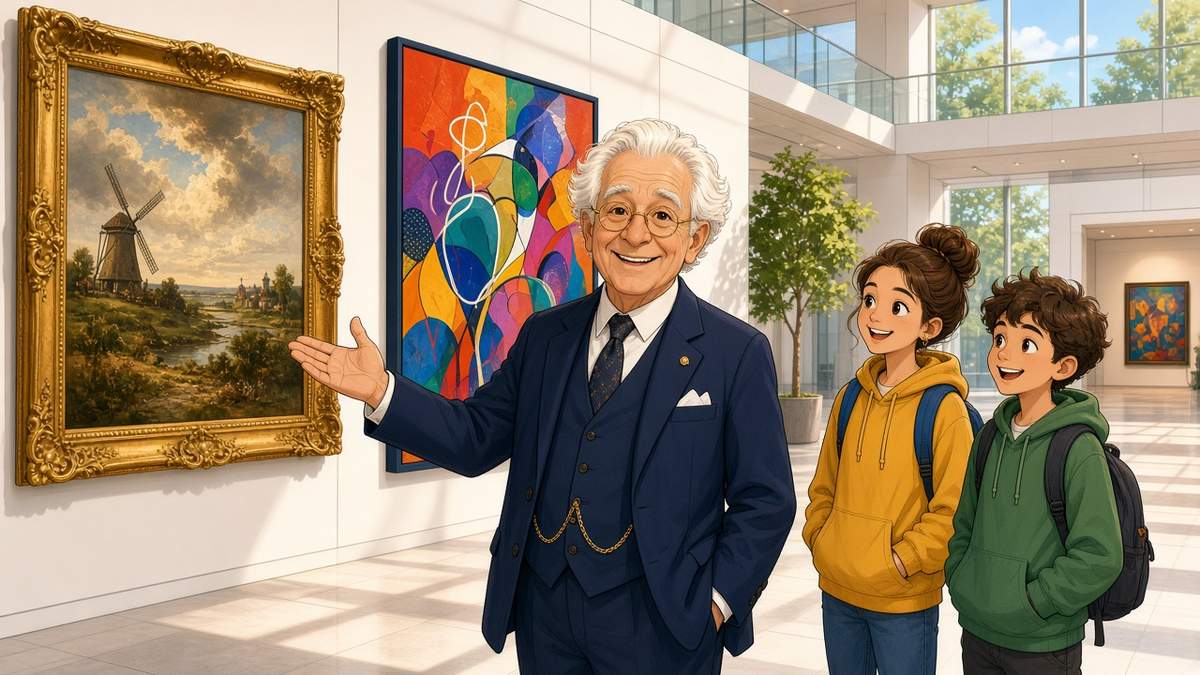
From 1993 to 2003 he led the Stedelijk Museum in Amsterdam. There he continued to avoid wall labels and became known for pairing very different works, old and new, so that visitors would look with fresh eyes, for example in the series “Couplets”. He also invited guest curators from outside the art world, once even Queen Beatrix. His period ended amid financial problems linked to an ambitious expansion plan, after which he worked as a writer and teacher. In 2016 he returned as guest curator for the exhibition “Excitement”, which looked back on his work in Eindhoven, The Hague and Amsterdam.
A legacy of looking
Mixing periods and styles was unusual in the 1970s and drew sharp criticism from traditionalists; today it is common museum practice. Current Stedelijk director Rein Wolfs praised Fuchs’s uncompromising belief in the direct encounter between viewer and artwork, saying that everything he did encouraged people to really look. Artist Jan Fabre described him as a passionate observer and storyteller who believed art must stay alive, unpredictable and free.