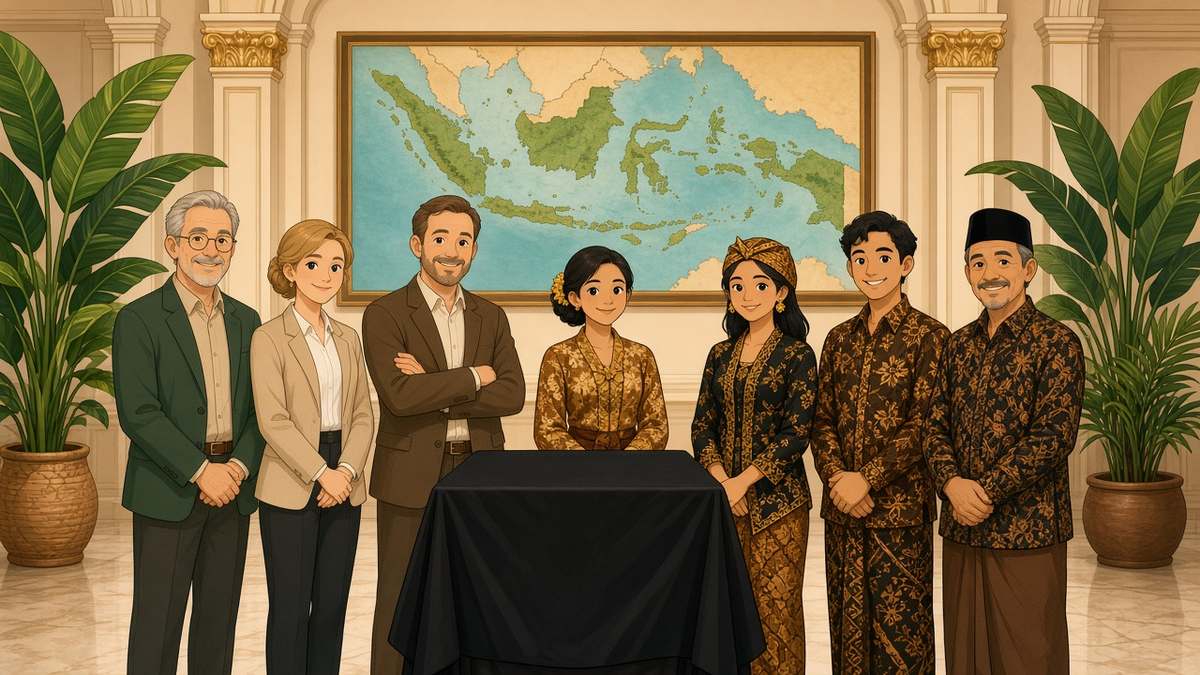
In a formal ceremony on Tuesday, 10 November 2026, the Museum Wiesbaden is handing ten human skulls from its collection to representatives of the government of Indonesia. According to the Hessian Ministry of Science and Culture, it is the first time a museum in Germany has returned human remains from the colonial period to Indonesia. To protect the dignity of the dead, the skulls will be covered with black cloth during the ceremony, which was scheduled for 1 pm. Hesse’s culture minister Timon Gremmels (SPD) is expected to speak.
A doctor in Dutch service
The remains came to Wiesbaden in the 19th century from the ethnographic collection of Ernst Albert Fritze, a physician born in Herborn in Hesse. From 1817 he served in the Dutch colonial medical service in what was then the Dutch East Indies. Research by Andy Reymann, the museum’s curator of cultural anthropology, shows that from 1833 Fritze sent objects to the Nassau Society for Natural History, the forerunner of today’s museum. The natural history collection owes him many specimens, among them a mounted Javan tiger, a species now extinct. Today’s Indonesia was never a German colony, which shows how colonial objects reached German collections through individuals working for other empires.
Part of a wider review
The ministry says the return followed “several years of intensive provenance research”. Gremmels called it part of the Hessian state institutions’ efforts to examine their collections systematically for unlawful acquisitions from the colonial era and to take responsibility for the history of their holdings. It is not Wiesbaden’s first return: in 2023 the museum gave a toi moko, a tattooed and preserved Māori ancestral head that Fritze had also sent, back to a delegation from New Zealand.
Other museums in Hesse are doing similar work, according to a dpa survey. The Senckenberg research institute and natural history museum in Frankfurt returned a Māori skull to New Zealand in 2011 and an Aboriginal skull to Australia in 2017. Frankfurt’s Weltkulturen Museum, which says a large share of its roughly 65,000 objects come from colonial contexts, has had a dedicated provenance research post since 2023. After a 2025 project on the remains of eleven individuals from Indonesia and Oceania, it contacted communities of origin in New Guinea and Indonesia and is working towards a return.
Why it matters
Provenance research is best known for tracing art looted by the Nazis. Today’s handover shows that its colonial strand is just as important, and that it is often about people rather than objects. For Indonesia, ten individuals are going home after almost two centuries. For German museums, it is one more step in the slow work of facing how their collections were built.