The National Gallery of Victoria has opened Passage: The Art of Atong Atem, a world-premiere solo exhibition devoted to one of Australia’s most distinctive young photographers. The show at The Ian Potter Centre: NGV Australia at Federation Square in Melbourne gathers more than 65 works made over the past decade, including a new commission created especially for the gallery. Entry is free, and the exhibition runs well into 2027.
From Ethiopia to Melbourne
Atong Atem was born in Ethiopia to South Sudanese parents and moved to Australia with her family in 1997. She is best known for vivid photographic self-portraits in which she transforms herself with colourful textiles, paint, costume and symbolic objects. Behind the bold colour sits serious subject matter: identity, race, gender and colonialism, and the way people of African descent have been pictured and asked to perform for the camera.
Her images draw on history, memory and imagination at once. They celebrate the resilience of her Dinka Bor culture and of Melbourne’s African diaspora, and they honour traditions and ancestral stories that survived displacement and war.
A sky full of stories
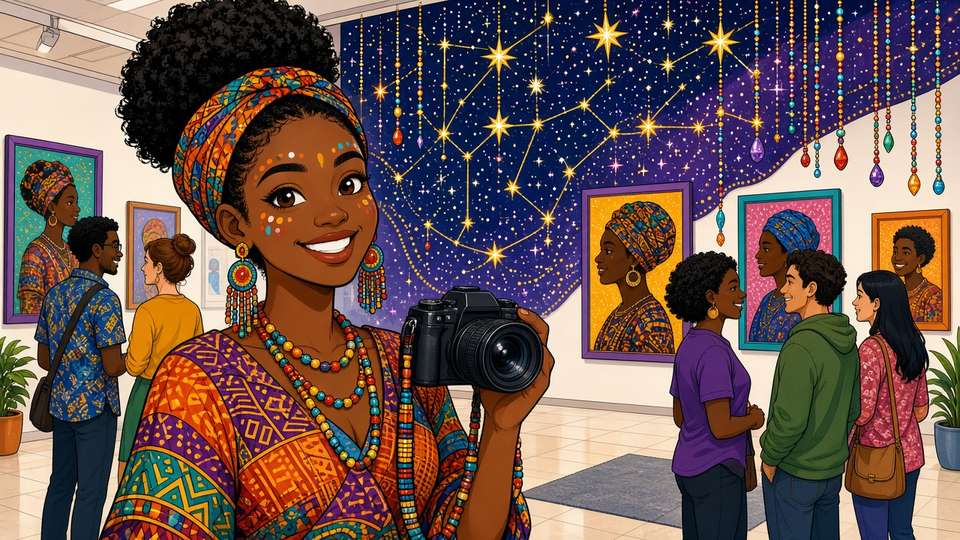
The highlight is As Above, a large wall installation about the stories held in the sky and its constellations. In it, Atem blends Dinka dance, traditional beading and Catholic iconography, three strands of her own background, into a single visual narrative. It is the kind of work that rewards both a quick glance and a long look.
Also on show is Banksia from 2021, a photographic series made at Melbourne’s Immigration Museum. It shines a light on African, African American and Caribbean convicts and free settlers in colonial Australia, people who are largely missing from the country’s familiar founding story.
Why this show matters
For a museum the size of the NGV to give a full survey to an artist of Atem’s generation is a strong signal. It puts photography made from inside a diaspora community at the centre of the national collection’s story rather than at its edges. For visitors, it is a joyful, colourful show with a lot to say, and one of the easiest invitations in Melbourne’s cultural calendar this season, since it costs nothing to walk in.